North Korea is set to hold a series of events Saturday to celebrate the 72nd anniversary of the signing of the armistice that ended the 1950-53 Korean War, the North's media reported.
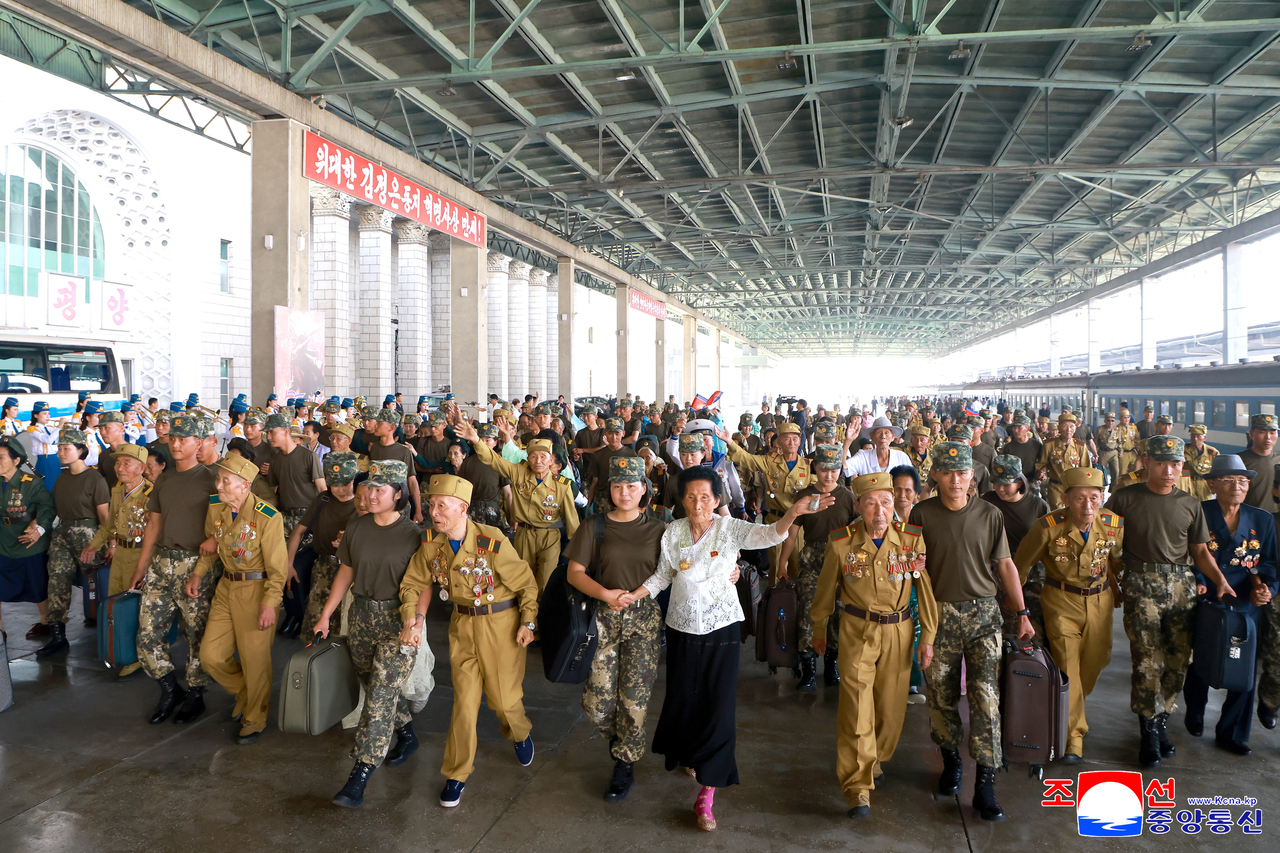
North Korea will hold celebrations for the anniversary to mark the country's victory in the Fatherland Liberation War in Pyongyang, and participants invited to the event arrived in the capital Thursday, according to the Korean Central Television.
The media said nighttime fireworks, a parade and a variety of performances would be held in the capital.
The Korean War, which started with an invasion by North Korea, ended in a truce, not a peace treaty, on July 27, 1953.
Since 1996, North Korea has celebrated the armistice signing date as Victory Day, claiming that it won the Liberation War against US-led aggression.
North Korea has used the anniversary to honor war veterans and reinforce internal unity.
For this year's celebrations, authorities have invited war veterans and people with wartime merits, as well as officials, the media said.
North Korean leader Kim Jong-un has also sent gifts to war veterans on the occasion of the anniversary.
Kim may attend the events, but it is unclear whether he will deliver a celebration speech.
In 2023, North Korea held a military parade to mark the 70th anniversary by inviting then Russian Defense Minister Sergei Shoigu and Chinese Communist Party politburo member Li Hongzhong in an apparent move to show its solidarity with Beijing and Moscow, which backed Pyongyang during the war, as Seoul, Washington and Tokyo were bolstering three-way security cooperation. (Yonhap)